Shopping for your first wig often feels like learning a second language. Between lace types, cap builds, and fiber blends, it is remarkably easy to spend hundreds of dollars on something that ends up sitting unworn in a box.
Whether you are navigating medical hair loss, exploring protective styling, or simply wanting a fresh look without heat damage, here are the 10 essential things you need to know before buying your first unit.
How to Choose a Wig for Beginners: 10 Things to Know Before Buying

Luveme Hair Special Sale: 30% OFF Now!
1. Synthetic vs. Human Hair: Maintenance Dictates the Choice
The biggest beginner misconception is that human hair is automatically better. It is more versatile, yes, but not necessarily better for a newcomer.
- Traditional Synthetic Hair: Modern synthetics look remarkably lifelike and come with “style memory.” That means you can wash the wig, let it air dry on a stand, and the curls or sleek finish snap right back into place without styling. The trade-off: traditional synthetic fibers cannot handle curling irons, blow dryers, or hot ovens.
- Human Hair: Moves, parts, and feels just like biological hair. You can curl it, straighten it, and color it. However, it behaves like biological hair too—meaning it frizzes in humidity, loses its shape in the rain, and requires blow-drying and round-brushing after every single wash.
If you want a grab-and-go morning routine, start with synthetic. If you love heat styling and want a piece that lasts over a year, invest in human hair.
2. Cap Construction Matters More Than the Hair Itself
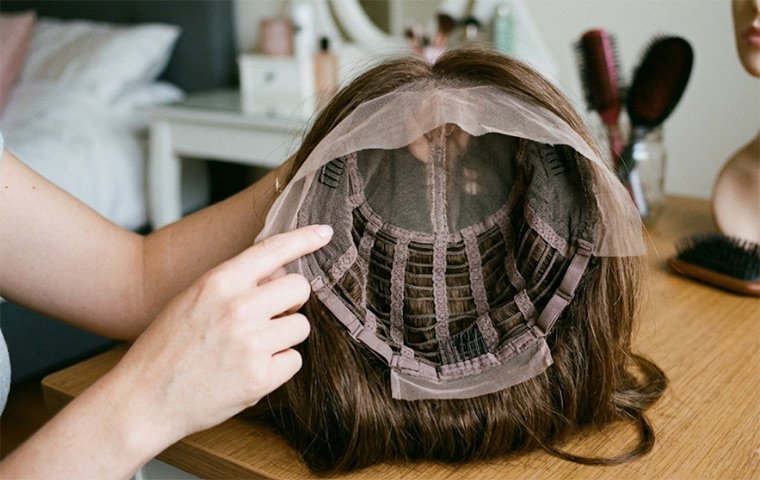
The cap is the foundation. If the interior construction is uncomfortable, itchy, or stiff, you will not wear the wig no matter how gorgeous the hair looks.
UNice Special Sale: 50% OFF Glueless Hair Wigs Now!
- Basic / Open Wefted: Strips of hair sewn onto an elastic web. Highly breathable and budget-friendly, but you cannot change the part line easily.
- Lace Front: Sheer lace runs along the forehead with individual strands tied into the mesh. This gives the illusion of hair growing directly out of your scalp and lets you push hair back behind your ears without exposing a harsh rim.
- Monofilament (Mono) Part/Top: A soft, fine mesh at the crown or parting area where each hair is hand-tied. When you look down at the part, you see what appears to be bare scalp rather than seams.
- 100% Hand-Tied: Every strand across the entire head is tied into soft mesh. This is the most flexible, lightweight, and gentle option on sensitive scalps, but carries the highest price tag.
The beginner sweet spot: A lace front combined with a monofilament part. It provides a seamless hairline and a realistic part line without requiring custom glue work.
3. Your Head Has a Specific Size (Do Not Guess)

IDefine Special Deals: 45% OFF Human Hair Wigs Now!
Wigs are not strictly one-size-fits-all. While roughly 90% of adults fit an Average cap (approx. 21.5 to 22.5 inches), small and large heads need petite or large caps to prevent painful pressure points or embarrassing slippage.
Take a flexible tailor’s tape measure and check three spots:
- Circumference: Around your hairline, behind the ears, down to the nape of your neck, and back up.
- Ear-to-Ear: Across the top crown from where the arms of your eyeglasses rest.
- Front-to-Nape: From your natural front hairline over the center top down to the nape.
Most quality caps include internal velcro or bra-hook tabs that allow you to adjust the band by about half an inch in either direction.
4. Heavy Density Is the Number One Beginner Giveaway
When people spot a wig from across the room, it is rarely the color or fiber that tips them off; it is the density.
Manufacturers often pack extra hair into factory caps to make them look thick and luxurious in photos. In reality, human scalps do not naturally sprout 200% density from hairline to crown.
- 130% (Light-to-Medium): Mimics standard natural hair thickness.
- 150% (Medium): Adds healthy volume without looking bulky.
- 180%–200%+: Very full; best reserved for stage performances, high-glam looks, or dense curls.
For your first purchase, aim for 120% to 140% density. If you receive a unit that feels bulky around the face, take it to an experienced stylist to thin out the interior layers with thinning shears.
5. Stick Close to Home for Your First Style
Your first wig is not the time to jump from a dark brunette pixie cut to 28-inch honey-blonde waves.
Wig adjustment is psychological as much as physical. When you look in the mirror and see someone completely unrecognizable, you feel self-conscious and assume everyone else is staring at your hair.
Pick a cut, length, and texture that mirrors a hairstyle you have already worn and liked. Once you master putting it on, securing it, and maintaining it, you can branch out into bold, playful transformations.
6. Monochromatic Color Looks Like a Helmet
Natural biological hair contains subtle ribbons of shade variations from sunlight exposure and growth cycles. Single-process flat color—especially jet black or uniform platinum blonde—often registers as synthetic and heavy.
Look for:
- Rooted colors (Shadow roots): A slightly darker shade at the roots creates depth and makes the scalp area look grounded and authentic.
- Dimensional highlights or lowlights: Multi-tonal blends (often listed with color codes like 4/27 or FS6/30/27) catch indoor light naturally and soften facial features.
7. Glueless Wigs Spare Beginners the Mess
Social media tutorials often show stylists laying lace down with strong liquid adhesives, melting spray, blow dryers, and elastic bands. While lace adhesive creates an invisible bond, it requires patience, practice, and careful solvent removal to protect your skin and edges.
As a beginner, look specifically for glueless ready-to-wear units. These wigs come equipped with:
- Pre-cut, pre-plucked hairlines.
- Internal piano-wire grips or velvet ear tabs.
- Wide, adjustable elastic nape bands that anchor the cap securely without glue.
You pop them on, adjust the strap, tuck your ears, and go.
8. Budget for the Starter Kit Essentials
UNice Special Sale: 50% OFF Human Hair Wigs Now!
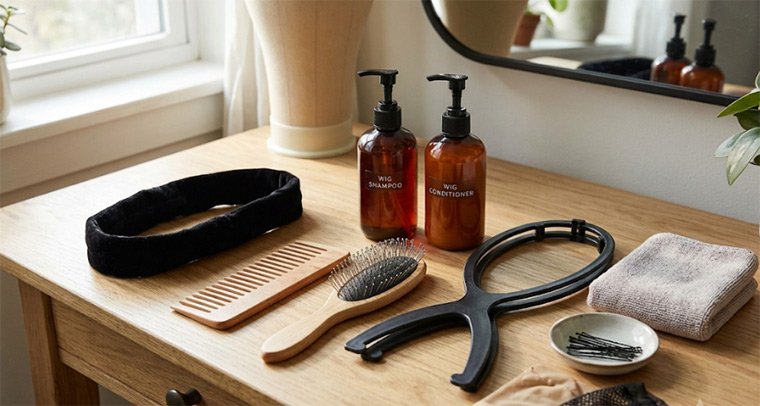
The cost on the checkout screen is never the final total. To keep a wig looking fresh, you need a few inexpensive non-negotiable tools:
- A Velvet Wig Grip: Worn underneath your wig like a headband. The textured velvet creates friction that keeps the cap from sliding back without pins.
- A Wide-Tooth Comb & Loop Brush: Standard bristle brushes pull out hand-tied knots and tear lace. Loop brushes glide smoothly over wefts.
- Fiber-Specific Shampoo and Conditioner: Regular grocery store shampoo contains sulfates that destroy synthetic fibers and dry out human hair units (which no longer receive scalp sebum).
- A Collapsible Wig Stand: Airflow is vital for drying and keeping the cap shape intact.
9. A First Reaction in the Mirror Is Almost Always Shock
Almost every first-time wig wearer has a moment of mild panic when putting on their unit straight out of the packaging.
Wigs are compressed in hairnets and cardboard sleeves during transit. Out of the box, fibers are flat, parted stiffly, and full of static.
- Give it a firm shake upside down to wake up the body.
- Place it on your head, lining up the ear tabs evenly right above your temple bones.
- Ensure the front lace sits directly along your natural hairline—never pulled too far down onto your forehead.
- Finger-comb the bangs or face-framing pieces into place.
Give yourself 10 minutes to let your eyes adjust to your reflection before judging the piece.
10. Check Insurance Coverage if Wearing for Medical Reasons
If you are purchasing a wig due to chemotherapy, alopecia areata, trichotillomania, or another medical condition, do not pay out of pocket before checking your health plan.
Many insurance providers cover 50% to 100% of the cost under durable medical equipment (DME). The key detail: ask your doctor or oncologist for a prescription specifying a “cranial prosthesis” or “hair prosthesis”. Insurance carriers frequently reject claims that use the word “wig,” but approve prescriptions billed with the proper medical terminology.
Quick Buyer’s Checklist for Your First Order
- Fiber: Synthetic for zero styling work; human hair for styling freedom.
- Cap: Glueless lace front with a monofilament part.
- Fit: Average cap unless your circumference is under 21″ or over 23″.
- Thickness: 130% density to avoid a bulky look.
- Shade: Rooted shade close to your natural undertone.